

In an era defined by rapid globalization and the free flow of digital information, cyberspace has become both a massive utility and a breeding ground for sophisticated threats. Today, data security is no longer just an IT department concern; it is a critical business priority. From confidential customer records to sensitive corporate financial data, modern organizations face a relentless daily battle against malicious hacking intrusions.
This is precisely why data breach prevention is arguably the most fundamental component of any comprehensive, forward-looking cybersecurity strategy. Without it, maintaining a secure presence in the modern digital landscape is virtually impossible.
What Is Data Breach Prevention?
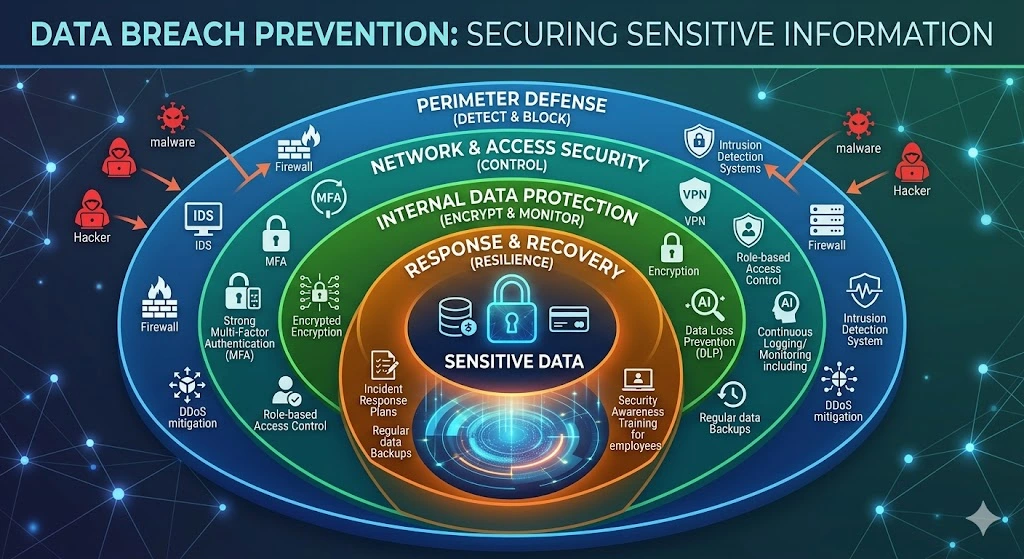
Data breach prevention refers to the systematic implementation of strategies, tools, and operational best practices designed to protect sensitive information from unauthorized access, theft, or accidental leakage.
This proactive approach goes far beyond simply installing a standard firewall. It involves:
- Securing complex networks and endpoints.
- Enforcing stringent data protection and privacy policies.
- Continuous employee education to recognize social engineering.
With the massive rise of remote work models, cloud computing adoption, and increasingly sophisticated cyberattacks, the importance of proactive breach prevention measures cannot be overstated.
Why Data Breach Prevention Is Essential
Implementing a robust defense mechanism is crucial for several interconnected structural and operational reasons:
1. Protecting Sensitive Information
Modern business organizations are required to retain, process, transmit, and store vast amounts of proprietary data. This includes customer identity metrics, supplier agreements, internal employee records, and long-term business strategies. A single breach can expose this delicate information to the dark web, leaving the organization vulnerable to extreme operational disruptions and a damaged reputation.
2. Avoiding Severe Financial Losses
Data breaches are incredibly expensive. Apart from the direct financial losses resulting from regulatory violations and legal penalties, companies must bear the costs of forensic investigations, system overhauls, and compensatory PR campaigns to pacify affected customers. Investing in preventative measures allows businesses to mitigate these financial risks entirely.
3. Maintaining Customer Trust
Trust is the hardest currency to earn and the easiest to lose. Customers willingly share their personal and financial information with businesses under the assumption that it will remain confidential. A violation of this privacy can trigger an immediate withdrawal of this trust. When customers leave, it chips away at long-term business sustainability, whereas a clean security record demonstrates that you value your clientele.
4. Ensuring Regulatory Compliance
Governments and independent global regulatory bodies have established strict frameworks to guard individual data privacy. Compliance with mandates like GDPR, HIPAA, and CCPA is non-negotiable. Breaching these legal regulations is punishable by massive fines and class-action lawsuits, making preventative compliance a top priority.
Strategies for Effective Data Breach Prevention
To build a resilient defense perimeter, organizations should focus on five core security pillars:
Regular Security Audits
Performing comprehensive security audits at least once a year is critical. These assessments help identify hidden vulnerabilities, legacy system cracks, and misconfigured access points before hackers can exploit them.
Encryption and Access Controls
Encrypting data both at rest and in transit ensures that even if data is intercepted, it remains unreadable without the proper decryption keys. Furthermore, executing strict role-based access controls (RBAC) ensures that employees can only access the specific information necessary for their everyday job roles.
Comprehensive Employee Training
Human error remains one of the primary reasons why data breaches occur globally. Protecting company data effectively requires continuous training programs that teach workers how to identify and avoid common cyber threats like phishing emails and malicious links.
Advanced Threat Detection
Deploying artificial intelligence and machine learning tools for continuous threat monitoring allows infrastructure teams to spot anomalies instantly. Automated threat detection can isolate a potential intrusion in real time, minimizing potential lateral movement across the network.
Backup and Recovery Plans
A bulletproof backup strategy means keeping isolated, encrypted copies of critical data off-site or in secure cloud environments. If a breach or ransomware attack occurs, an optimized disaster recovery plan ensures business continuity without paying a ransom.
Conclusion
The threat of data breaches continues to grow as cybercriminals employ more diverse, complex, and sophisticated methodologies. However, by adopting industry best practices, commercial entities can drastically minimize their attack surface.
Setting up enhanced security procedures does more than just protect information assets; it signals to customers, stakeholders, and regulatory authorities that your organization meets modern compliance standards. Securing your PCs, cloud ecosystems, and local networks today is the only way to avoid becoming highly susceptible to a devastating system breach tomorrow.