

As a business grows, managing deliveries becomes increasingly complex. More customers, larger order volumes, additional drivers, and wider delivery areas can quickly turn a simple process into a major operational challenge.
For businesses that rely on product distribution, field services, retail deliveries, or last-mile logistics, improving delivery efficiency is essential for controlling costs and maintaining customer satisfaction.
Late deliveries, inefficient routes, poor communication, and manual processes can increase operating expenses and create a frustrating customer experience. The good news is that businesses can improve delivery performance by combining better planning technology, employee training, and continuous performance monitoring.
How to Improve Delivery Efficiency
Before investing in new technology or changing your delivery process, understand how your current operation works.
Start by reviewing:
- How many deliveries do you complete each day?
- Which areas do your drivers cover?
- Where do most delays occur?
- How much time is spent planning routes?
- What are your average fuel and delivery costs?
- How often do customers contact you about delivery status?
Answering these questions can reveal where your biggest efficiency problems are.
Set Clear Delivery Goals
Define what you want to achieve before making changes. Your goals might include reducing delivery times, lowering fuel expenses, increasing successful first-time deliveries, or improving customer satisfaction.
Clear objectives also make it easier to measure whether a new process or technology is actually producing results.
Find Operational Bottlenecks
Delivery problems can occur at different stages of the process.
Common bottlenecks include:
- Manual order processing
- Poor route planning
- Driver scheduling conflicts
- Traffic-related delays
- Inaccurate delivery information
- Poor communication between dispatchers and drivers
- Lack of real-time delivery visibility
Identifying the exact source of a problem allows you to solve the underlying issue instead of simply treating the symptoms.
Plan for Future Growth
A delivery process that works for 50 orders a day may struggle when the business reaches 200 or 500 orders.
When evaluating your current system, consider future growth. Choose processes and technology that can handle increasing order volumes without requiring a complete operational overhaul.
Use Delivery Management Software
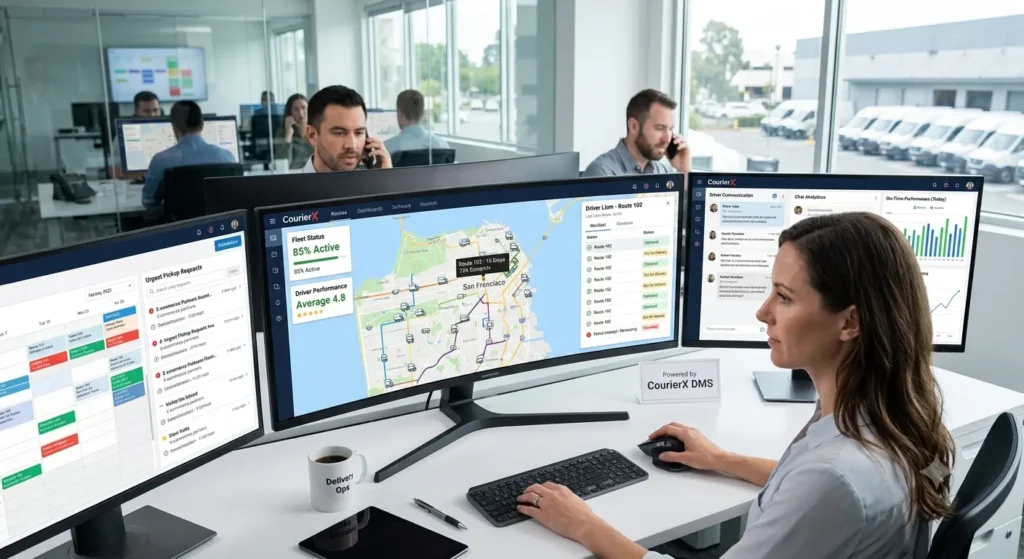
Technology can significantly improve delivery operations by reducing manual work and providing better visibility.
Modern delivery management software can help businesses manage orders, assign drivers, optimize routes, track deliveries, and analyze operational performance from a centralized system.
When comparing delivery management solutions, look for features that directly support your business needs.
Automated Route Planning
Manually creating delivery routes can take significant time and may result in unnecessary mileage. Automated route planning helps businesses improve delivery efficiency by creating practical routes based on multiple operational factors.
Automated routing can consider:
- Driver availability
- Delivery locations
- Traffic conditions
- Delivery priorities
- Customer time windows
- Vehicle capacity
Better routes help drivers complete more stops while reducing unnecessary travel, fuel consumption, and delivery delays.
Real-Time Delivery Tracking
Real-time tracking gives businesses greater visibility into their delivery operations and helps improve delivery efficiency.
Operations teams can see where drivers are, identify potential delays, and provide customers with more accurate delivery updates. This visibility also improves accountability because managers can monitor delivery progress throughout the journey.
With accurate tracking information, businesses can respond to problems faster and keep deliveries moving efficiently.
Driver Communication
Fast communication between drivers and dispatchers is essential for maintaining an efficient delivery process when unexpected problems occur.
Integrated communication features can help teams respond quickly to:
- Traffic disruptions
- Customer availability issues
- Vehicle problems
- Address changes
- Route changes
- Delivery exceptions
Resolving these issues quickly can prevent small problems from becoming major delays and help maintain consistent delivery performance.
Order Management
A centralized order management system can improve delivery efficiency by reducing errors caused by spreadsheets, paperwork, or disconnected tools.
When order information is stored and updated in one place, dispatchers and drivers can access accurate information throughout the delivery process. This reduces administrative delays and makes it easier to coordinate multiple orders as the business grows.
Delivery Analytics
Data helps businesses understand how effectively their delivery operation is performing.
Useful delivery performance metrics include:
- On-time delivery rate
- Average delivery time
- Cost per delivery
- Fuel consumption
- Failed delivery rate
- Driver productivity
- Customer satisfaction
Analyzing these metrics allows businesses to identify inefficiencies, improve delivery processes, and make decisions based on real operational data.
Optimize Your Delivery Routes
Route optimization is one of the most effective ways to improve delivery efficiency. An optimized route reduces unnecessary driving, saves fuel, minimizes travel time, and allows drivers to complete more deliveries during their shifts.
Analyze Traffic Patterns
Traffic can have a major impact on delivery times, particularly in busy urban areas.
Use current traffic information where available and identify recurring congestion points. Adjusting departure times or routes can help drivers avoid predictable delays and maintain better delivery efficiency.
Plan Around Delivery Windows
Some customers require deliveries during specific time periods. These requirements should be considered when creating delivery routes.
A route that looks efficient on a map may not be practical if it causes the driver to miss important customer time windows. Planning around these requirements helps businesses provide more reliable delivery services.
Group Nearby Deliveries
Clustering deliveries by geographic area can reduce unnecessary travel.
Instead of repeatedly moving between distant locations, drivers can complete several nearby deliveries during the same route. This approach reduces mileage, saves fuel, and improves overall delivery efficiency.
Use Historical Delivery Data
Past delivery data can help identify useful patterns.
For example, businesses may discover that certain locations consistently take longer than expected or that specific routes experience delays at particular times of day.
Using this information can help improve future route planning and create more efficient delivery schedules.
Allow Real-Time Route Adjustments
Delivery conditions can change throughout the day. Accidents, road closures, customer requests, and unexpected delays may require drivers to change their routes.
Giving dispatchers and drivers the ability to make real-time adjustments helps maintain delivery efficiency when plans change unexpectedly.
For specialized route-planning requirements, businesses may also explore solutions such as SPICA E-Navigator for maritime navigation and planning.
Train Drivers and Dispatchers
Technology alone cannot create an efficient delivery operation. Employees need the knowledge and skills to use systems correctly and respond to problems effectively.
Train Dispatchers
Dispatchers should understand how to:
- Create and modify routes
- Assign deliveries
- Monitor drivers
- Handle delivery exceptions
- Communicate efficiently
- Use performance data
Well-trained dispatchers can make faster decisions and help maintain efficient delivery operations when unexpected situations occur.
Support Drivers With Practical Training
Drivers should understand route procedures, communication expectations, customer service standards, and how to use delivery technology.
Regular refresher training can help employees stay familiar with updated processes and software. Better training can also reduce delivery errors and support consistent service quality.
Improve Customer Communication
Customers want to know when their orders will arrive. Poor communication can make even a minor delay feel like a major service problem.
Providing accurate delivery updates can improve customer confidence and reduce unnecessary calls to customer service teams.
Businesses can provide:
- Delivery confirmation messages
- Estimated arrival times
- Real-time tracking
- Delay notifications
- Rescheduling options
- Proof of delivery
If a delay occurs, communicate it as early as possible. Transparent communication helps customers adjust their plans and contributes to a better overall delivery experience.
Reduce Failed and Repeat Deliveries
Failed deliveries can increase costs because they require additional driver time, fuel, and operational resources.
Businesses can improve delivery efficiency and reduce failed deliveries by:
- Confirming customer addresses
- Providing accurate delivery windows
- Sending delivery reminders
- Allowing customers to update delivery instructions
- Offering flexible rescheduling
- Using proof-of-delivery systems
Improving first-attempt delivery success can reduce unnecessary trips while improving customer satisfaction.
Monitor Key Delivery Performance Metrics
You cannot improve what you do not measure.
Businesses should establish a regular process for reviewing delivery efficiency metrics. Instead of focusing on a single number, evaluate several indicators together to understand the complete performance of your delivery operation.
Important Delivery KPIs
On-Time Delivery Rate: Measures how often deliveries arrive within the promised time.
Average Delivery Time: Shows how long it takes to complete deliveries.
Cost Per Delivery: Helps identify whether delivery expenses are increasing as the business grows.
Fuel Consumption: Provides insight into route and vehicle efficiency.
Failed Delivery Rate: Shows how frequently deliveries require another attempt.
Customer Satisfaction: Helps measure how delivery performance affects the customer experience.
Reviewing these KPIs regularly allows businesses to identify trends, address inefficiencies, and make informed decisions that support long-term delivery performance.
Automate Repetitive Delivery Tasks
Manual administration can consume valuable time as delivery volumes increase.
Where practical, businesses can automate repetitive tasks such as:
- Order entry
- Driver assignment
- Delivery notifications
- Route creation
- Status updates
- Proof-of-delivery records
- Performance reports
Automation reduces administrative workload, minimizes manual errors, and allows employees to focus on higher-value tasks. As a result, businesses can maintain better delivery efficiency as order volumes increase.
Maintain Vehicles and Equipment
Vehicle reliability is another important part of delivery efficiency.
Unexpected breakdowns can cause delays, missed delivery windows, and additional costs. Businesses should establish preventive maintenance schedules and monitor vehicle performance.
Regular vehicle checks can identify potential problems before they result in operational disruptions, helping drivers complete deliveries more reliably.
Build a Scalable Delivery Process
Growing businesses need delivery systems that can adapt as demand increases.
A scalable delivery operation should be able to accommodate:
- More orders
- Larger delivery areas
- Additional drivers
- New customer requirements
- Seasonal demand
- New delivery services
Rather than creating temporary solutions every time order volumes increase, businesses should develop standardized processes that support long-term delivery efficiency.
A scalable system makes it easier to maintain service quality while the business expands into new markets or handles higher delivery volumes.
Continuously Improve Your Delivery Strategy
Delivery efficiency should not be treated as a one-time project. Customer expectations, fuel costs, traffic conditions, technology, and order volumes can all change over time.
Businesses should regularly review their delivery operation and identify new opportunities for improvement.
A simple improvement cycle can include:
- Measure current delivery performance.
- Identify the biggest operational problem.
- Test a practical solution.
- Measure the results.
- Keep what works.
- Improve or replace what does not.
This continuous approach helps businesses make gradual improvements without disrupting the entire delivery operation.
Final Thoughts
Improving delivery efficiency is about more than simply delivering orders faster. It involves creating a reliable system that controls costs, supports employees, improves visibility, and gives customers a predictable experience.
Businesses can improve delivery efficiency by understanding their operational needs, using appropriate delivery management technology, optimizing routes, training their teams, communicating clearly with customers, and monitoring important KPIs.
As your business grows, your delivery process should grow with it. Investing in efficient systems, better route planning, employee training, and continuous improvement can create a more reliable, scalable, and customer-focused delivery operation for the future.