



In today’s hyper-connected world, businesses across the USA are constantly looking for effective ways to reach, engage, and convert their target audience online. While “Digital Marketing” serves as an umbrella strategy covering all online promotional techniques, “Social Media Marketing” has emerged as a powerful subset within it.
Yet, many business owners confuse the two, failing to maximize their separate strengths. Understanding this distinction is crucial for USA businesses to allocate their marketing budgets effectively and drive real growth.
Social Media Marketing: Key Differences, Challenges, and Strategies for USA Businesses
In today’s competitive online marketplace, USA businesses need more than an active Facebook page or occasional Instagram post to attract customers. A strong online presence requires a complete marketing strategy that combines search visibility, valuable content, paid advertising, customer engagement, and conversion-focused digital experiences.
This is where many business owners become confused about digital marketing vs. social media marketing. Although these terms are often used interchangeably, they are not the same.
Digital marketing is a broad strategy that includes multiple online marketing channels, while social media marketing focuses specifically on promoting a business through social networking platforms. Understanding the difference can help American businesses allocate their marketing budgets more effectively, reach the right audience, and generate sustainable growth.
Digital Marketing vs. Social Media Marketing: The Core Differences
The simplest way to understand the difference is this:
Digital marketing is the complete online marketing ecosystem, while social media marketing is one important part of that ecosystem.
Digital marketing includes a wide range of strategies designed to increase online visibility, attract qualified traffic, generate leads, and improve sales. Social media marketing focuses on building relationships and engaging audiences through platforms such as Facebook, Instagram, LinkedIn, TikTok, YouTube, and X.
What Is Digital Marketing?

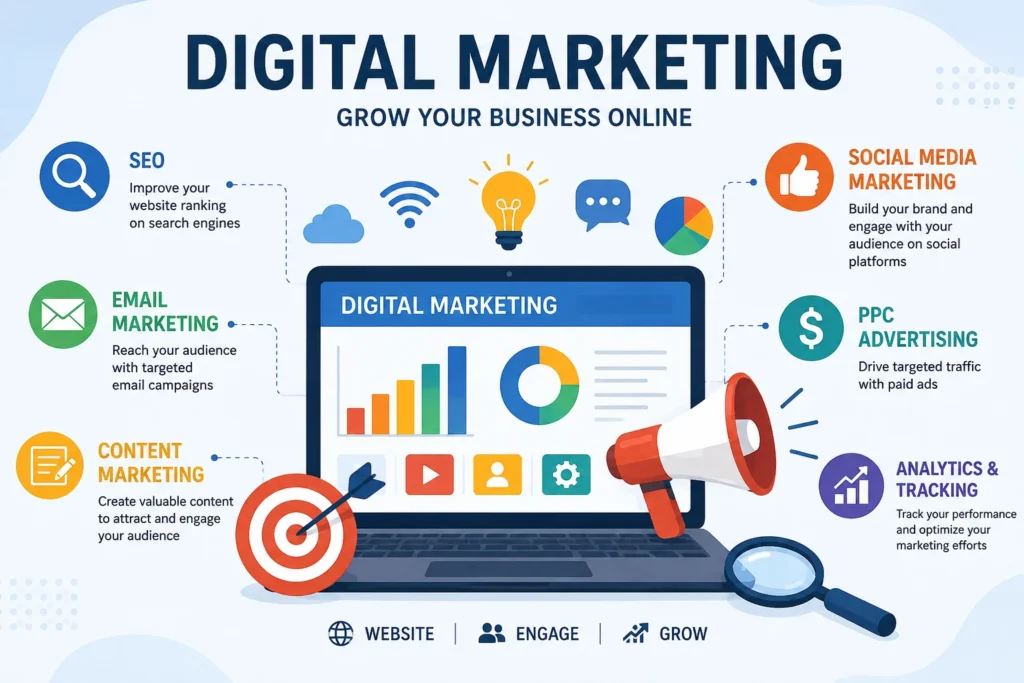
Digital marketing refers to the use of digital channels, websites, search engines, online platforms, and technology to promote products or services.
A complete digital marketing strategy may include:
- Search Engine Optimization (SEO)
- Pay-Per-Click (PPC) advertising
- Content marketing
- Email marketing
- Website optimization
- Search engine marketing
- Affiliate marketing
- Video marketing
- Online reputation management
- Marketing automation
- Conversion rate optimization
For USA businesses, digital marketing can help create a long-term system for attracting potential customers. For example, a well-optimized website may appear in Google search results when users look for relevant products, services, or solutions.
Unlike short-term social media campaigns, some digital marketing channels—especially SEO and evergreen content—can continue attracting organic traffic over time.
What Is Social Media Marketing?
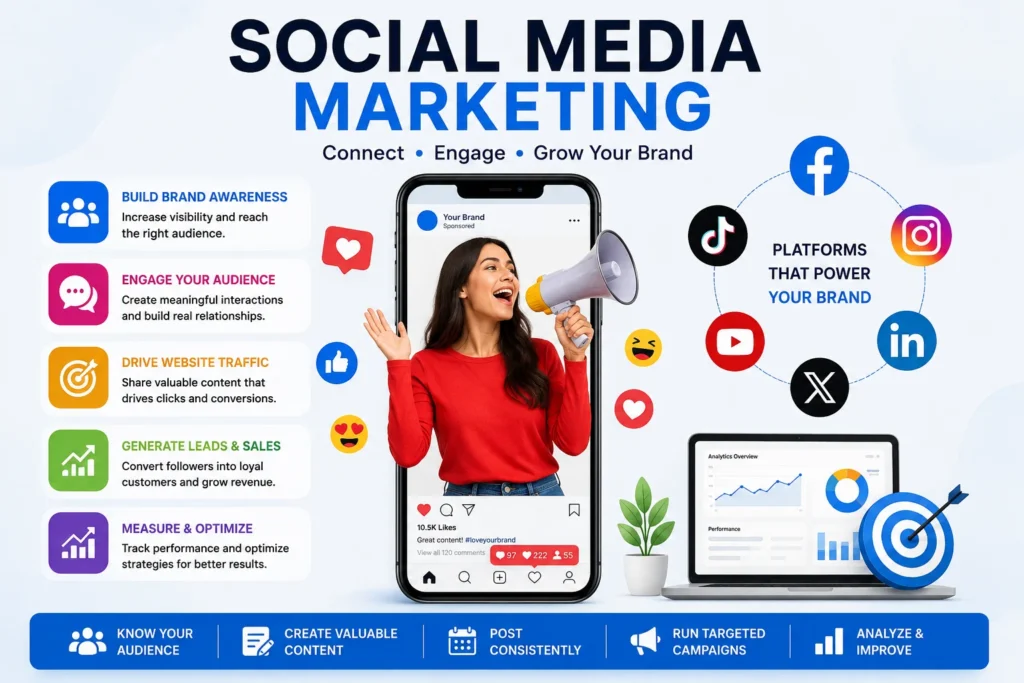
Social media marketing is a focused branch of digital marketing that uses social platforms to build brand awareness, engage users, promote content, and support business growth.
Common social media platforms include:
- TikTok
- YouTube
- X
Businesses use social media to publish educational content, share updates, answer customer questions, build communities, promote products, and direct users to websites or landing pages.
Social media marketing can create faster engagement than many long-term digital strategies. However, businesses do not fully control their social media reach because platform algorithms, advertising costs, and audience behavior can change.
Why USA Businesses Need Both Digital and Social Media Marketing
Many small businesses make the mistake of investing most of their marketing budget in social media advertising while ignoring other valuable digital channels.
Social media can generate awareness and engagement, but it should not always be the only source of website traffic or customer leads.
A balanced strategy may look like this:
- SEO helps customers discover your business through Google.
- Content marketing answers customer questions and builds authority.
- Social media distributes content and encourages engagement.
- Email marketing nurtures leads and supports repeat business.
- Paid advertising creates faster visibility for targeted campaigns.
- Website optimization helps convert visitors into customers.
When these channels work together, businesses can create a more reliable and measurable customer journey.
Common Challenges in Social Media Marketing
Many businesses post regularly but still struggle to generate leads or sales. In most cases, the problem is not simply a lack of content. The real issue is the absence of a clear strategy.
1. Unclear Target Audience
Trying to speak to everyone often results in content that feels too general.
Businesses should understand:
- Who their ideal customers are
- What problems customers want to solve
- Which social platforms they use
- What type of content they prefer
- What motivates them to take action
For example, a B2B software company may benefit more from LinkedIn content than short entertainment-focused videos. A local lifestyle brand may achieve stronger engagement on Instagram or TikTok.
2. Focusing Only on Likes and Followers
Likes, shares, comments, and follower counts can provide useful engagement data, but they do not always represent business growth.
Important marketing KPIs may include:
- Website visits
- Qualified leads
- Contact form submissions
- Phone calls
- Email sign-ups
- Cost per lead
- Conversion rate
- Customer acquisition cost
- Revenue generated from campaigns
A social media campaign with fewer likes may still perform well if it generates qualified leads and sales.
3. Posting Without a Content Strategy
Random posting can make a brand appear inconsistent.
A strong social media plan should include:
- Clear business goals
- Defined content categories
- A realistic publishing schedule
- Platform-specific content
- Relevant calls to action
- Regular performance analysis
Businesses should focus on quality and usefulness rather than posting only to remain active.
4. Poor Balance Between Organic and Paid Content
Organic content can build trust and long-term engagement, but organic reach may be limited.
Paid social advertising can help businesses reach targeted audiences faster. However, advertising without clear targeting, effective creative assets, or optimized landing pages can lead to wasted spending.
The best approach often combines organic content with carefully managed paid campaigns.
5. Rising Advertising Costs
Competition for online attention has increased across many advertising platforms.
For USA businesses, rising costs can make it difficult to achieve a positive return without strong audience targeting and campaign optimization.
Businesses can improve performance by:
- Testing different ad formats
- Creating multiple ad variations
- Using clear audience segments
- Improving landing page speed
- Tracking conversions
- Reviewing campaign data regularly
Social Media Marketing for Service-Based Businesses
Service-based businesses require a different social media strategy than e-commerce brands.
Businesses such as law firms, real estate agencies, financial consultants, marketing agencies, healthcare providers, and professional service companies sell expertise, results, and trust.
Because services are often intangible, potential customers may need more information before making a decision.
Build Trust Through Social Proof
Customer reviews, testimonials, case studies, and success stories can help demonstrate credibility.
Useful content may include:
- Client video testimonials
- Before-and-after results
- Detailed case studies
- Customer feedback
- Industry certifications
- Team expertise
- Business achievements
Social proof can reduce uncertainty and help potential customers understand the value of a service.
Use LinkedIn for Professional Networking
LinkedIn can be valuable for B2B companies, consultants, agencies, and professional service providers.
Businesses can use LinkedIn to:
- Share industry insights
- Publish expert opinions
- Connect with decision-makers
- Build professional relationships
- Promote educational content
- Demonstrate subject knowledge
Consistent and useful content may help businesses improve brand visibility and professional credibility.
Educate Before Selling
Educational content can build trust by helping users solve small problems before they become customers.
Examples include:
- How-to guides
- Short educational videos
- Industry tips
- Frequently asked questions
- Checklists
- Expert insights
- Problem-solving posts
Helpful content can position a business as a reliable source of information without relying on aggressive sales messaging.
The Role of Social Media in Inbound Marketing
Inbound marketing focuses on attracting potential customers through useful and relevant content rather than relying only on direct promotional messages.
Social media supports inbound marketing by helping businesses distribute content and connect with audiences.
A typical inbound marketing journey may include:
- A user discovers a helpful social media post.
- The post directs the user to a detailed blog article.
- The user learns more about the topic and explores the website.
- The website offers a useful resource, newsletter, consultation, or service.
- The business continues building the relationship through email or other channels.
This process can help turn social media engagement into website traffic, qualified leads, and potential customers.
How Social Media Supports SEO and Website Growth
Social media activity does not replace SEO, but it can support a broader content and visibility strategy.
When businesses share useful blog posts, guides, videos, and resources, they can increase content exposure and encourage more users to visit their websites.
Social media can help businesses:
- Promote new website content
- Increase brand awareness
- Reach new audiences
- Generate referral traffic
- Encourage content sharing
- Build relationships with industry professionals
The strongest approach is to create valuable website content first and then use social media to distribute and promote it.
Effective Digital and Social Media Marketing Strategies
USA businesses can improve their marketing performance by following these strategies:
Create a Search-Friendly Website
A website should be easy to navigate, mobile-friendly, fast, and focused on user needs.
Important website elements include:
- Clear service pages
- Helpful content
- Easy navigation
- Strong calls to action
- Contact information
- Mobile optimization
- Fast page loading
Invest in Helpful SEO Content
Create content that answers real customer questions.
Instead of publishing content only for keywords, focus on providing clear, accurate, and useful information.
Helpful content may include:
- Industry guides
- Service explanations
- Comparison articles
- Frequently asked questions
- Case studies
- Tutorials
Choose Social Platforms Carefully
Businesses do not need to be active on every platform.
Select platforms based on:
- Target audience
- Industry
- Content format
- Marketing goals
- Available resources
Connect Social Content to Business Goals
Every post does not need to generate an immediate sale. However, social media activity should support broader goals such as:
- Brand awareness
- Website traffic
- Lead generation
- Customer education
- Community building
- Customer retention
Measure Performance Regularly
Review marketing data to understand what is working.
Track:
- Website traffic
- Engagement quality
- Lead generation
- Conversion rates
- Advertising costs
- Customer acquisition
- Revenue performance
Data can help businesses improve campaigns and make better marketing decisions.
Frequently Asked Questions
Is social media marketing the same as digital marketing?
No. Social media marketing is one part of digital marketing. Digital marketing includes SEO, email marketing, content marketing, websites, online advertising, and other digital channels.
Which is better: digital marketing or social media marketing?
Neither is automatically better. The right choice depends on business goals, target audience, budget, and industry. Many businesses benefit from combining both.
Is social media marketing useful for small businesses?
Yes. Social media can help small businesses build awareness, engage customers, share useful information, and direct users to their websites.
Can social media marketing improve website traffic?
Yes. Useful social content can encourage users to visit website pages, blogs, product listings, and service pages.
Why is SEO important for businesses?
SEO can help businesses improve their visibility in search results and attract users who are actively looking for relevant information, products, or services.
Final Thoughts
When comparing digital marketing vs. social media marketing, the goal should not be to choose one and ignore the other.
Digital marketing provides the broader infrastructure that supports online growth through websites, SEO, content, email, advertising, and conversion optimization. Social media marketing creates opportunities for direct engagement, community building, content distribution, and brand visibility.
For USA businesses, the most effective strategy is often an integrated approach. Social media can introduce people to a brand, while websites, search content, email campaigns, and optimized customer journeys can help turn that attention into meaningful business results.
By combining long-term digital marketing foundations with strategic social media engagement, businesses can build stronger visibility, improve customer relationships, and create a more sustainable online presence.