


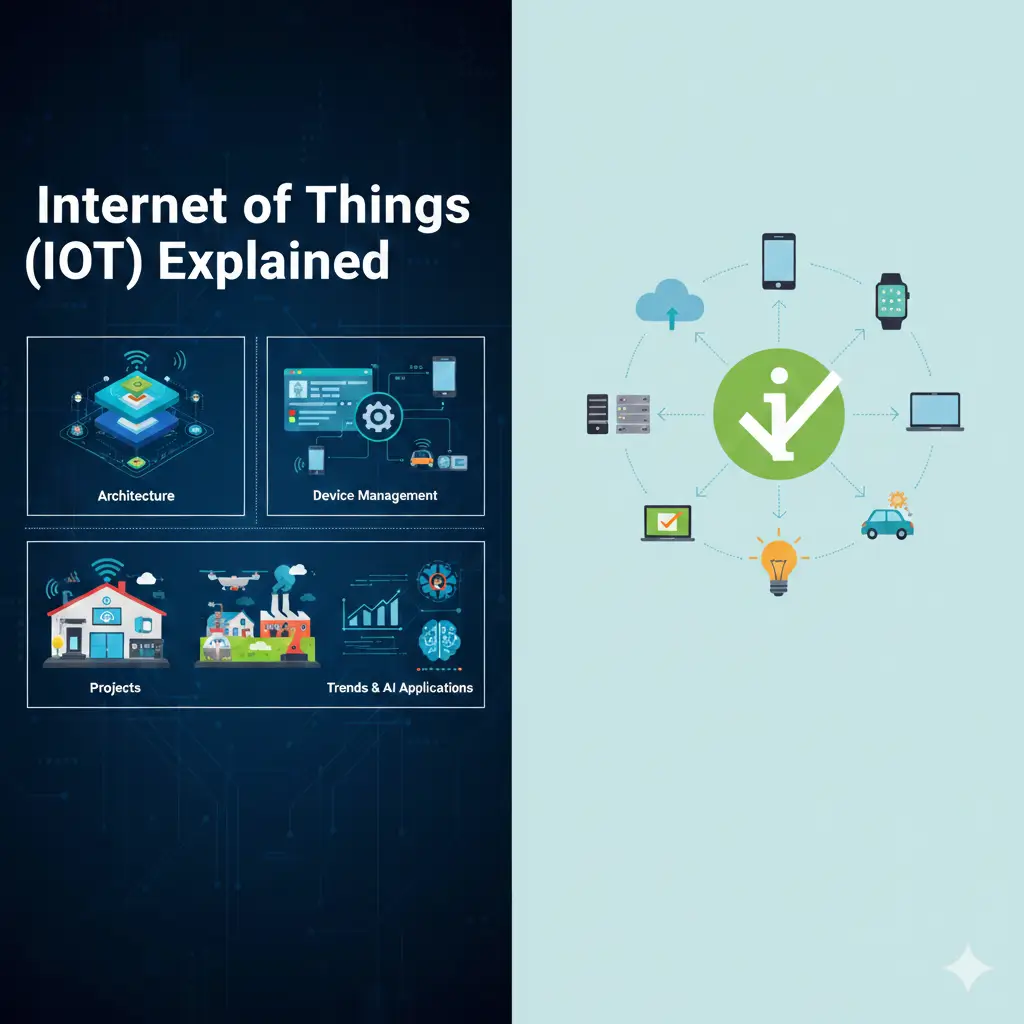
“The Internet of Things” is no longer an innovation that is associated with the future. In fact, it already is a reality that is unfolding around and through us with utmost ease. Right from our living rooms and offices, the manufacturing process, roads, and even the cities, the technology of “The Internet of Things” has already become an integral part of our contemporary framework. A body of devices that functioned separately is now networked and work in tandem with each other based on real-world circumstances.
The current applications of the Internet of Things include the following: Heating and temperature regulating smart systems adjust accordingly for efficient energy saving. Fitness and healthcare gadgets measure a person’s activities and well-being on a daily basis. Traffic regulating systems minimize traffic congestion through the analysis of real-time traffic. Smart manufacturing plants increase production efficiency through the connectivity of manufacturing equipment and their monitoring.
Essentially, IoT is all about the relationship between physical devices and the internet. IoT enables devices to sense, interact, and act based on their surroundings by means of sensors, software, and connectivity, all without requiring extensive human intervention.
What Is the Internet of Things (IoT)?
The devices also use sensors to collect information that is later analyzed for transmission to the cloud environment.
An IoT device is typically characterised by:
l Sensors to collect data
l Connectivity to the internet
l Embedded software
l Ability to interact with other devices or systems
Examples include:
l Smart meters used by UK energy companies
l GPS trackers in logistics vehicles
l Smart machines in manufacturing plants
l Wearable health devices
The term “inter IoT” is often used to describe interoperability between different IoT systems, meaning devices from different manufacturers can work together smoothly.
IoT Architecture Explained (Simple View)
IoT Architecture the same is the foundation of all IoT; it represents how data will pass to the end-user.
1. Device Layer
This is where sensors and hardware devices live. These devices:
l Measure temperature, motion, pressure, location, or humidity
l Are installed in homes, factories, vehicles, or public places
Example: A temperature sensor in a smart factory in Manchester.
2. Connectivity Layer
This layer sends data from devices to the cloud using internet of things telecommunications, such as:
l Wi-Fi
l 4G / 5G
l LPWAN
l Bluetooth
l Ethernet
3. Data Processing Layer
Data is processed using:
l Cloud computing
l Edge computing
l Analytics platforms
Here, raw data becomes meaningful information.
4. Application Layer
Example: A logistics manager tracking vehicle locations across the UK.
IoT Device Management – Why It Matters
IoT device management is one of the most important but often ignored parts of IoT.
Device management and the Internet of Things is important because:
l Thousands of devices must be monitored
l Software updates must be pushed remotely
l Security threats must be controlled
l Faulty devices must be detected quickly
Key Functions of IoT Device Management
l Device onboarding
l Remote monitoring
l Firmware updates
l Security authentication
l Performance tracking
Fundamentally, the intelligent infrastructure employed by British companies operates on the principle of optimized management of the devices concerned.
Artificial Intelligence in the Internet of Things
AI allows IoT systems to:
l Predict failures
l Analyse patterns
l Make real-time decisions
l Reduce human intervention
Real Examples
l Smart factories predicting machine breakdowns
l Traffic systems adjusting signals automatically
l Retail systems managing stock levels
AI transforms IoT from “connected devices” into intelligent systems.
Internet of Things in Telecommunications
Internet of things telecommunications is the foundation that supports all IoT activities.
Telecom providers in the UK offer:
l High-speed 5G networks
l Secure data transmission
l Dedicated IoT SIMs
l Low-latency communication
Without modern telecom infrastructure, IoT projects would fail.
Internet of Things in Transportation
Safety, efficiency, and sustainability are being heightened by the internet of things in the field of transport.
Key Applications
l Smart traffic lights
l Fleet tracking systems
l Vehicle diagnostics
l Public transport monitoring
These cities, for instance, employ IoT in London and Birmingham to mitigate congestion and resultant emissions.
Internet of Moving Things (IoMT)
Most of the times, the IoT is related in the main with the concept of networked objects, or items, able to move from location to location.
Examples include:
l Delivery vehicles
l Trains
l Ships
l Aircraft
IoMT is essential for logistics, supply chain optimisation, and transport planning.
IoT Projects – Real-World Use Cases
1. Smart Homes
l Smart lighting
l Energy monitoring
l Security systems
2. Smart Cities
l Waste management
l Air quality monitoring
l Smart parking
3. Healthcare IoT
l Remote patient monitoring
l Wearable health trackers
4. Industrial IoT
l Predictive maintenance
l Automated quality checks
These IoT projects are widely adopted across the UK.
Internet of Things Manufacturing Companies
The IoT manufacturing companies utilize IoT in enhancing their efficiencies and optimizing their costs.
Benefits
l Reduced downtime
l Better quality control
l Lower operational costs
l Improved worker safety
Next will be the development of “smart factories” in the industry, and it will take place with the help of
IoT Trends Shaping the Future
1. AI-Powered IoT
More systems will rely on machine learning.
2. Edge Computing
Faster processing near devices.
3. 5G Expansion
Solutions that enhance connectivity for real-time communications.
4. Cybersecurity Focus
Stronger security frameworks.
Internet of Things Environment – Challenges
Despite benefits, IoT faces challenges:
l Data privacy concerns
l Security vulnerabilities
l High initial investment
l Integration complexity
Benefits of IoT for UK Businesses
l Improved decision-making
l Cost savings
l Real-time insights
l Automation
l Competitive advantage
Final Thoughts
The Internet of Things (IoT) is silently integrating itself into daily business activity. From humble beginnings with IoT-based devices to comprehensively developed digital systems that allow organisations to work smarter, faster, and more effectively, IoT is now no longer a research concept but a solution in its own right when applied to various aspects such as machine control, transportation, customer behaviour analysis, or smart city solutions.
For businesses, having an understanding of the IoT architecture and the implementation of the appropriate management of IoT devices has become the “have to.” It assists in keeping businesses organized, securing data, and ensuring that everything “humms.” With effective IoT implementation, there would be less downtime, reduced unnecessary expenses, and better performance. One of the most important sectors where data in real-time is considered essential includes the likes of manufacturing, transport, and telecommunications.
Additionally, the incorporation of artificial intelligence technology within the boundaries of the Internet of Things is creating even more value. This technology has ensured that the IoT not only gathers data, but it also analyses data, finds patterns, and makes decisions.
Frequently Asked Questions (FAQs)
1. How does AI improve IoT systems?
The Internet of Things is aided by the Artificial Intelligence system in the analysis of the data, prediction, and decision-making process for smart decisions.
2. What is the Internet of Moving Things?
It is defined as the network of cars and transportation systems that have the ability to move from one location to another while sharing information.
3. What do we mean by the Internet of Things (IoT)?
These devices can range from machines to cars, to devices and sensors, or even wristwatches. The most important objective of IoT technology is to ensure that the devices have minimal uses of human labor to perform certain tasks automatically through the use of data in real time. The age of technology that we are living in today has seen the use of IoT technology help companies become more efficient in their decision-making processes.
4. How does IoT architecture work in real-life applications?
IoT Architecture IoT technology operates through the segmentation of the entire system into layers. The first step involves the collection of data through sensors. The data is then transmitted through the internet or telecom network. Finally, the data is processed through cloud or edge technology, and finally, the data is visible to users through application or dashboards. This makes IoT systems scalable and easy to manage.
5. Why is IoT device management important for businesses?
Importance Of Device Management and Internet Of Things Device and internet of things management is a key aspect because, nowadays, companies rely on hundreds or thousands of devices connected to the internet or networks. Devices, if not managed, become outdated, vulnerable, and unreliable for companies that rely on them for their daily operations. The internet of things device management makes it possible for the organization to track the performance and update the device software with ease.
6. What role does telecommunications play in IoT systems?
Telecommunications in internet of things offer internet connectivity to facilitate the communication among devices. The use of 4G, 5G, NB-IoT, and low power is aimed at enabling the rapid and secure transfer of data. An effective telecom solution is needed in real-time monitoring applications in transport and smart city projects.
7. How is the internet of things used in transportation?
The internet of things in the transportation sector can be used in vehicle tracking, transport management, and transport and road safety. Real-time location and performance information can be achieved by the use of sensor and GPS technology. It assists in fuel conservation and rapid delivery. Public transport is also greatly assisted.
8. What is meant by the internet of moving things?
The internet of moving things is more focused on the things which keep on moving, such as cars, shipments, trains, and delivery carts. These devices involve the utilization of sensors as well as connectivity to track the movements, status, or condition of the items or object. It allows organizations to gain more visibility into the things, thus reducing losses for the organizations.
9. Is IoT suitable for small and medium-sized businesses?
Yes, the reach of IoT technology has extended beyond large business organizations. Smaller organizations will be able to implement IoT technology solutions pertaining to the management of energy, security, inventory, and customer monitoring. The cost-effectiveness associated with IoT technology has resulted because of the cloud platform.
10. What should businesses consider before starting an IoT project?
Companies need to think ahead before starting the IoT project. They need to formulate some goals and determine the architecture to be used, management of the devices, and most notably the concept of security.