


In today’s fast-moving digital economy, organisations are under increasing pressure to deliver software that is secure, scalable, reliable, and capable of adapting to changing business needs. Speed is important, but modern software delivery is no longer measured only by how quickly an application reaches production. Quality, security, user experience, compliance, maintainability, and long-term performance are equally important.
The System Development Life Cycle (SDLC) remains one of the most effective frameworks for managing software and information-system development. However, the way organisations apply the SDLC has changed significantly. By 2025, artificial intelligence, cloud computing, DevSecOps, automation, predictive analytics, and continuous delivery have transformed traditional development practices.
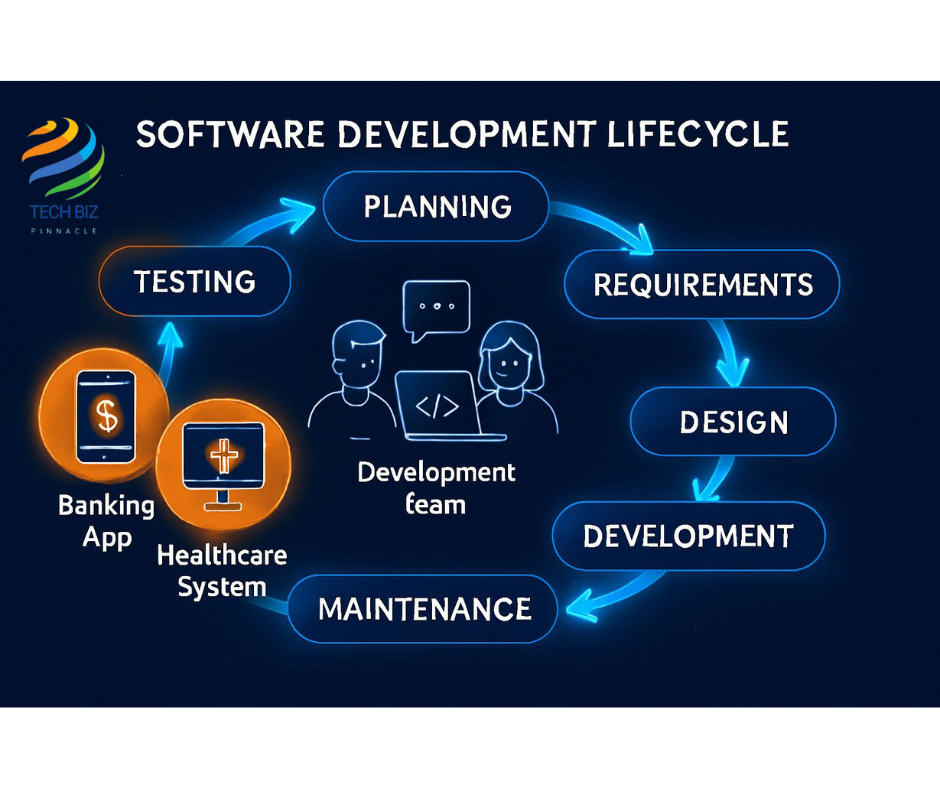
Modern development teams are moving away from isolated, linear workflows and adopting more connected approaches. Planning, design, development, testing, deployment, monitoring, and maintenance are increasingly treated as continuous activities rather than separate tasks.
This article explains the meaning of system development, explores the major phases of the modern SDLC, and highlights practical strategies for faster and smarter software delivery. It also examines feasibility studies, system installation, software development environments, user life-cycle management, systems engineering, automation, automotive software development, and IT life-cycle management.
Understanding the Meaning of System Development
System development is the structured process of planning, designing, building, testing, deploying, operating, and improving a software application or information system.
The purpose of system development is to create technology solutions that meet defined business goals and user requirements. A successful system should not only function correctly but should also be secure, easy to use, scalable, maintainable, and capable of supporting future growth.
System development brings together several important areas, including:
- Business analysis
- Software engineering
- User experience design
- Data management
- Cybersecurity
- Quality assurance
- Infrastructure management
- Regulatory compliance
- Ongoing system maintenance
In modern organisations, system development also plays an important role in digital transformation. Businesses use software systems to automate processes, improve customer experiences, support data-driven decisions, and create new digital services.
A well-managed system development process reduces uncertainty and helps teams identify risks before they become expensive problems.
Why a System Development Policy Is Important
A system development policy provides clear rules and standards for how software and information systems should be planned, developed, tested, deployed, and maintained.
Without consistent policies, different teams may use incompatible development methods, security practices, documentation standards, or approval processes. This can create operational risks and make systems more difficult to manage.
An effective system development policy may define:
- Security requirements
- Data-protection procedures
- Coding standards
- Testing expectations
- Documentation requirements
- Change-management processes
- Access-control rules
- Risk-assessment procedures
- Compliance responsibilities
- Approval and deployment controls
System development policies are particularly important in highly regulated industries such as healthcare, banking, financial services, government, and automotive manufacturing.
In 2025, many organisations are integrating security and compliance requirements directly into development workflows. This approach helps teams identify potential issues earlier instead of treating security as a final-stage activity.
The Role of Analysis in System Development
System analysis is one of the most important stages of the development process. It helps organisations understand the problem before investing significant time and resources in a solution.
During the analysis phase, teams collect requirements, review existing workflows, identify user needs, assess technical limitations, and define expected outcomes.
Common activities include:
- Interviewing stakeholders
- Reviewing business processes
- Identifying user requirements
- Mapping workflows
- Analysing existing systems
- Defining functional requirements
- Defining non-functional requirements
- Identifying technical risks
- Evaluating possible solutions
In 2025, AI-assisted analysis tools are helping teams organise requirements, summarise stakeholder feedback, identify inconsistencies, and improve documentation.
However, AI should support professional judgement rather than replace it. Human involvement remains necessary to understand business priorities, organisational constraints, customer expectations, and regulatory responsibilities.
System Development Life Cycle Feasibility Study

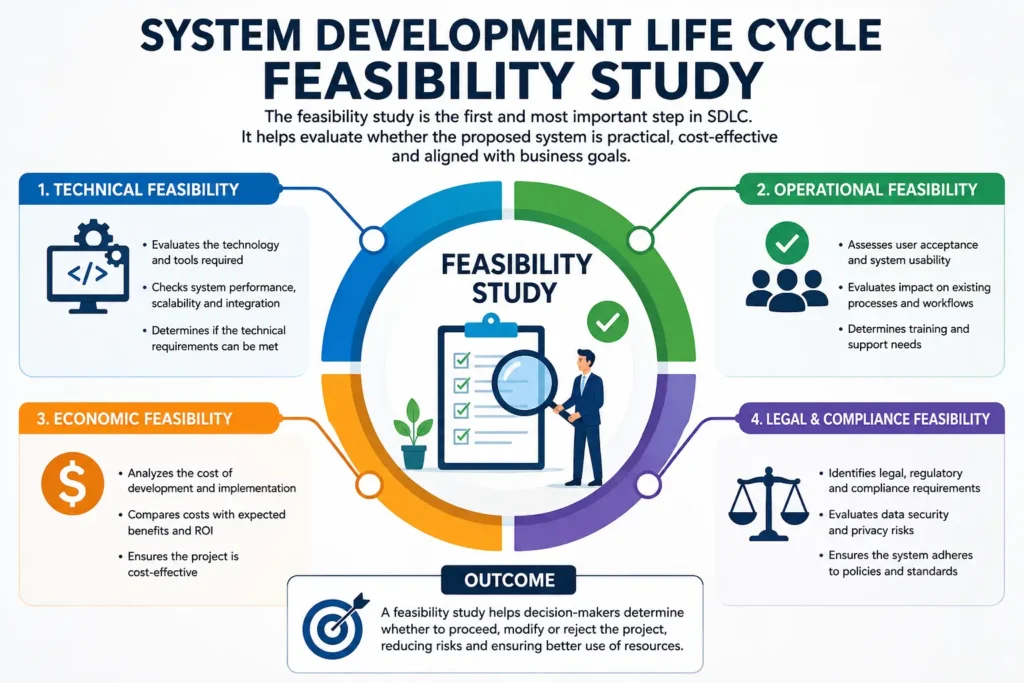
A feasibility study is usually performed before full-scale development begins. Its purpose is to determine whether a proposed system is practical, financially justified, technically achievable, and aligned with organisational goals.
A strong feasibility study can prevent organisations from investing in projects that have unrealistic costs, unclear requirements, limited user value, or unacceptable risks.
The main types of feasibility include the following.
1. Technical Feasibility
Technical feasibility evaluates whether the required technology, infrastructure, skills, and tools are available.
Key questions may include:
- Can the proposed technology support the required features?
- Is the system capable of handling expected workloads?
- Can the application integrate with existing systems?
- Does the organisation have the required technical expertise?
- Are the selected platforms secure and maintainable?
Technical feasibility also considers scalability. A system that works for a small number of users may require significant changes when demand increases.
2. Operational Feasibility
Operational feasibility examines whether the proposed system will work effectively within the organisation.
Important considerations include:
- Will employees and customers use the system?
- Does the solution improve existing workflows?
- Is sufficient training available?
- Will the system create new operational challenges?
- Can support teams manage the technology?
User adoption is an important part of operational feasibility. Even technically advanced software may fail if it is difficult to use or does not solve a meaningful problem.
3. Economic Feasibility
Economic feasibility compares the expected costs of a project with its anticipated benefits.
Costs may include:
- Software development
- Cloud infrastructure
- Hardware
- Licensing
- Cybersecurity
- Employee training
- Maintenance
- Technical support
- Future upgrades
Benefits may include:
- Increased productivity
- Reduced operating costs
- Improved customer satisfaction
- Faster business processes
- Lower error rates
- New revenue opportunities
Modern analytics and forecasting tools can help organisations estimate project costs and identify financial risks more accurately.
4. Legal and Compliance Feasibility
Legal and compliance feasibility evaluates whether the proposed system must meet specific laws, regulations, standards, or contractual requirements.
Depending on the industry, organisations may need to consider:
- Data-protection requirements
- Privacy obligations
- Accessibility standards
- Cybersecurity regulations
- Industry-specific rules
- Software licensing
- Data-retention policies
Compliance should be considered from the beginning of the project. Addressing regulatory requirements only before deployment can create delays and increase costs.
Major Phases of the System Development Life Cycle
Although SDLC models may vary, most modern software projects include several core phases.
1. Planning
The planning phase defines the project’s purpose, scope, objectives, resources, risks, budget, and expected outcomes.
Teams may create:
- Project plans
- Delivery timelines
- Resource estimates
- Risk registers
- Initial requirements
- Success metrics
Effective planning provides direction while allowing flexibility for changing business requirements.
2. Requirements Analysis
During this phase, development teams work with stakeholders to understand what the system must do.
Requirements are generally divided into two categories:
Functional requirements describe system capabilities. For example, a user may need to create an account, upload a document, or generate a report.
Non-functional requirements describe quality expectations. These may include performance, security, availability, accessibility, and scalability.
Clear requirements reduce misunderstandings and help prevent unnecessary rework.
3. System Design
System design converts requirements into technical specifications.
The first major step in the systems design phase is usually the transformation of approved requirements into a structured system design.
This may include:
- Software architecture
- Database design
- Data models
- Application workflows
- User-interface designs
- API specifications
- Security architecture
- Integration plans
Modern teams increasingly use model-driven development, reusable design patterns, cloud-native architecture, and AI-assisted engineering tools.
4. Development
During the development phase, software engineers write code and build system components.
Modern development practices often include:
- Version control
- Code reviews
- Automated builds
- Secure coding standards
- Continuous integration
- Reusable components
- Automated unit testing
Development is no longer limited to writing application code. Teams must also manage infrastructure, security configurations, databases, integrations, and deployment processes.
5. Testing
Testing verifies that the system works as expected and meets defined quality requirements.
Common testing activities include:
- Unit testing
- Integration testing
- System testing
- Performance testing
- Security testing
- Usability testing
- Regression testing
- User acceptance testing
Automated testing helps teams run checks more frequently and identify problems earlier.
6. Deployment
Deployment makes the software available to users.
Modern deployment methods may include:
- Continuous delivery
- Continuous deployment
- Phased releases
- Blue-green deployments
- Canary releases
- Feature flags
These approaches can reduce deployment risks by allowing teams to release changes gradually.
7. Maintenance and Continuous Improvement
Software development does not end after deployment.
Post-release activities may include:
- Bug fixes
- Security updates
- Performance improvements
- Feature enhancements
- Infrastructure optimisation
- User-support services
- Monitoring and incident response
Continuous improvement helps systems remain useful as business requirements and technology environments change.
Major Phases of System Installation
System installation is a critical stage because it moves the software from a controlled development environment into real operational use.
A successful installation process usually includes the following phases.
1. Preparation Phase
The required infrastructure is prepared before deployment.
This may include:
- Configuring cloud services
- Preparing servers
- Setting up databases
- Configuring networks
- Creating user accounts
- Establishing access controls
- Preparing backup systems
- Reviewing security settings
Teams should also create rollback procedures in case deployment problems occur.
2. Pilot Testing Phase
A pilot deployment introduces the system to a limited group of users or a controlled environment.
The pilot phase can help identify:
- Software defects
- Security weaknesses
- Performance problems
- Usability issues
- Integration failures
- Training gaps
User feedback collected during this stage can improve the final deployment.
3. Full-Scale Deployment Phase
After successful testing and approval, the system is deployed across the organisation or made available to all intended users.
Full deployment may involve:
- Data migration
- User onboarding
- System monitoring
- Technical support
- Performance validation
- Operational reporting
A phased rollout may be safer than releasing the system to all users at once.
4. Post-Installation Review
After deployment, teams evaluate whether the system is meeting its objectives.
The review may measure:
- System availability
- Application performance
- User satisfaction
- Security events
- Error rates
- Business outcomes
The results can be used to improve future releases.
Software Development Life Cycle Environments
Controlled development environments are essential for reliable software delivery.
Most organisations use separate environments to reduce the risk of untested changes reaching production.
Development Environment
The development environment is where engineers build software and perform early testing.
It may include:
- Source code
- Development databases
- Local tools
- Unit-testing frameworks
- Debugging tools
This environment changes frequently and is not intended for end users.
Testing or Quality Assurance Environment
The testing environment is used to verify software functionality and quality.
Teams may perform:
- Integration testing
- Regression testing
- Performance testing
- Security testing
- Compatibility testing
A stable testing environment improves the reliability of test results.
Staging Environment
The staging environment closely resembles the production environment.
It is used for:
- Final validation
- Release testing
- Configuration checks
- Deployment rehearsals
- User acceptance testing
A realistic staging environment can help identify issues that may not appear during earlier testing.
Production Environment
The production environment is the live system used by customers, employees, or other end users.
Production systems require:
- Continuous monitoring
- Strong security controls
- Reliable backups
- Incident-response procedures
- Performance management
- Access governance
Understanding the User Life Cycle
The user life cycle describes how people interact with a system over time.
A successful software product should support users throughout their entire journey.
1. User Onboarding
Onboarding helps new users understand the system.
Common onboarding resources include:
- Tutorials
- Product guides
- Knowledge bases
- Training sessions
- Interactive walkthroughs
Effective onboarding can improve adoption and reduce support requests.
2. Active Use
During active use, users depend on the system to complete tasks.
Teams should monitor:
- User engagement
- Feature adoption
- Application performance
- User feedback
- Common errors
This information can guide future improvements.
3. Support and Maintenance
Users may require assistance when they encounter technical problems or need additional guidance.
Support activities may include:
- Help-desk services
- Bug reporting
- Knowledge-base updates
- Feature improvements
- Security updates
4. User Exit or Transition
Users may leave a system because of role changes, account closures, system replacement, or product retirement.
A secure offboarding process should include:
- Removing access
- Protecting user data
- Archiving required information
- Transferring responsibilities
- Supporting system migration
Lifecycle Systems Engineering in 2026

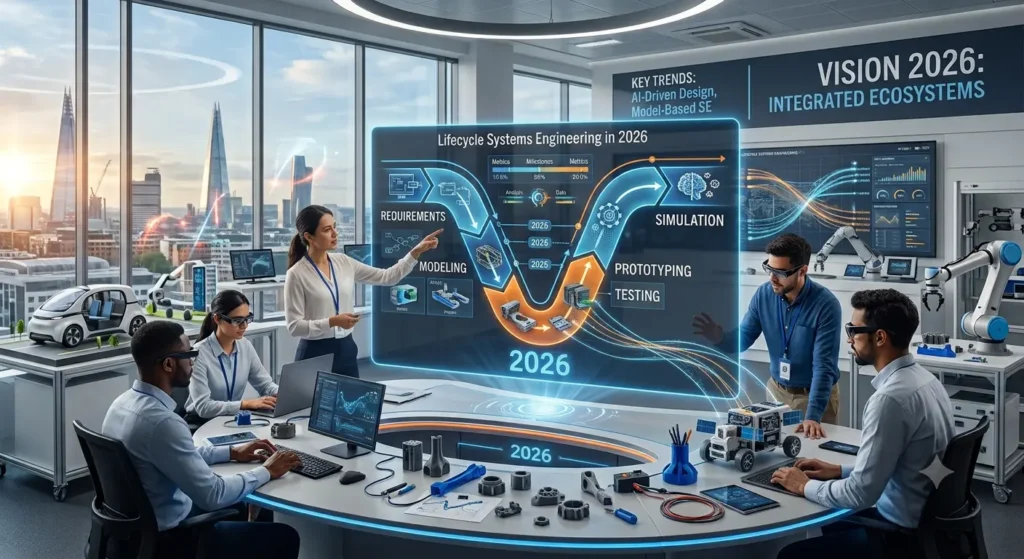
Lifecycle systems engineering applies systems-thinking principles across the complete life of a product or technology solution.
Instead of focusing only on software development, it considers how a system will be operated, maintained, upgraded, secured, and eventually retired.
Modern lifecycle systems engineering may include:
- Digital twins
- Predictive maintenance
- Real-time monitoring
- Security-by-design
- Sustainability analysis
- Long-term reliability planning
Digital twins can help organisations simulate system behaviour and evaluate potential changes before implementing them.
AI-supported predictive maintenance can identify warning signs before major failures occur.
Sustainability is also becoming more important. Organisations are increasingly measuring energy use, cloud-resource consumption, hardware life cycles, and environmental impact.
Automation in the Software Development Life Cycle
Automation reduces repetitive work and supports faster, more consistent software delivery.
An automated software development life cycle may include:
- Automated builds
- Automated testing
- Automated security scans
- Automated compliance checks
- Automated deployments
- Automated infrastructure management
- Automated monitoring
Automation can improve delivery speed, but it must be carefully designed and monitored.
Poorly configured automation may spread errors quickly. Therefore, automated workflows should include approval controls, security checks, logging, and rollback procedures.
Automotive Software Development Life Cycle
Automotive software requires specialised development practices because vehicle systems may affect safety, reliability, and regulatory compliance.
Modern vehicles contain software for:
- Driver-assistance systems
- Vehicle control
- Battery management
- Navigation
- Infotainment
- Connectivity
- Autonomous driving functions
The automotive software development life cycle often includes the following stages.
1. Requirements Definition
Requirements must address safety, reliability, performance, cybersecurity, and regulatory expectations.
2. Model-Based Design
Engineers use models and simulations to design and evaluate vehicle systems before implementation.
3. Development and Integration
Software components are developed and integrated with vehicle hardware and electronic control units.
4. Testing and Verification
Automotive software may require extensive testing in laboratories, simulations, controlled environments, and real-world conditions.
5. Deployment and Updates
Software is integrated into vehicles and may later be updated through secure over-the-air technology.
Because automotive software can affect critical vehicle functions, strong verification and change-management processes are essential.
IT Life Cycle Management
IT life-cycle management covers the planning, acquisition, implementation, operation, maintenance, and retirement of technology resources.
It may include:
- Hardware
- Software
- Cloud services
- Networks
- Data systems
- Security tools
- Digital assets
Modern IT life-cycle management helps organisations control costs, reduce technology risks, and plan for future requirements.
Key practices include:
- Cloud-first infrastructure planning
- Asset tracking
- Capacity forecasting
- Software-license management
- Hardware-refresh planning
- Cybersecurity monitoring
- Responsible technology disposal
AI-assisted asset management can help organisations identify underused resources, predict system obsolescence, and improve investment decisions.
Green IT practices also support responsible technology management by reducing energy consumption and improving the reuse or recycling of retired equipment.
Proven Strategies for Faster and Smarter Software Delivery
Modern organisations can improve SDLC performance by applying the following strategies.
Build Security Into Every Phase
Security should begin during planning and continue through development, testing, deployment, and maintenance.
Automate Repetitive Processes
Automated testing, deployment, monitoring, and security checks can reduce manual effort and improve consistency.
Use Small and Frequent Releases
Smaller releases are generally easier to test, review, deploy, and reverse.
Improve Collaboration
Developers, security specialists, operations teams, analysts, and business stakeholders should work together throughout the project.
Monitor Systems Continuously
Real-time monitoring helps teams identify performance problems and security risks before they affect a large number of users.
Measure Meaningful Outcomes
Useful metrics may include:
- Deployment frequency
- Lead time for changes
- Application availability
- Change-failure rate
- Recovery time
- User satisfaction
Metrics should support improvement rather than encourage unnecessary speed.
Design for Scalability
Systems should be capable of supporting future users, workloads, integrations, and business growth.
Keep Documentation Current
Clear documentation supports maintenance, onboarding, troubleshooting, audits, and future development.
The Future of the System Development Life Cycle
The future of SDLC will be shaped by intelligent automation, AI-assisted engineering, cloud-native architecture, stronger cybersecurity requirements, and greater attention to sustainability.
However, technology alone will not guarantee successful software delivery.
Organisations will continue to depend on:
- Clear business goals
- Skilled development teams
- Strong governance
- Reliable testing
- User-focused design
- Responsible use of AI
- Continuous improvement
The most successful development organisations will combine automation with human expertise. They will use AI to accelerate analysis, coding, testing, and monitoring while maintaining professional oversight and accountability.
Conclusion
The modern System Development Life Cycle is no longer a simple sequence of planning, coding, testing, and deployment. It is a connected and continuous framework that combines business strategy, engineering, security, automation, user experience, operations, and long-term technology management.
By using detailed feasibility studies, clear requirements, secure development practices, controlled environments, automated testing, continuous monitoring, and effective IT life-cycle management, organisations can deliver software faster without sacrificing quality.
In 2025, successful software delivery depends on building systems that are not only functional but also secure, scalable, resilient, maintainable, and valuable to users.
A modern SDLC provides the structure needed to achieve these goals. When organisations combine proven development principles with responsible automation and continuous improvement, they can create technology solutions that support both current needs and futur