



The internet has transformed the way we work, communicate, shop, and learn. From online banking and social media to cloud storage and artificial intelligence, digital technology has become an essential part of our daily lives. While these advancements provide countless opportunities, they also introduce significant cybersecurity risks. Every day, hackers launch millions of attacks targeting individuals, businesses, governments, and educational institutions.
Cybercrime is no longer limited to large corporations or technology companies. Today, anyone with an internet connection can become a target. Whether you use email, browse websites, make online purchases, or simply connect to public Wi-Fi, your personal information may be at risk if proper security measures are not in place.
This is why cybersecurity awareness has become more important than ever. Understanding how cyber threats work and learning practical ways to protect yourself can significantly reduce the chances of becoming a victim of cybercrime.
At Tech Biz Pinnacle, we believe that cybersecurity education should be accessible to everyone. Whether you are a student, employee, freelancer, entrepreneur, or business owner, this comprehensive guide will help you strengthen your digital security and build safer online habits.
What Is Cybersecurity Awareness?

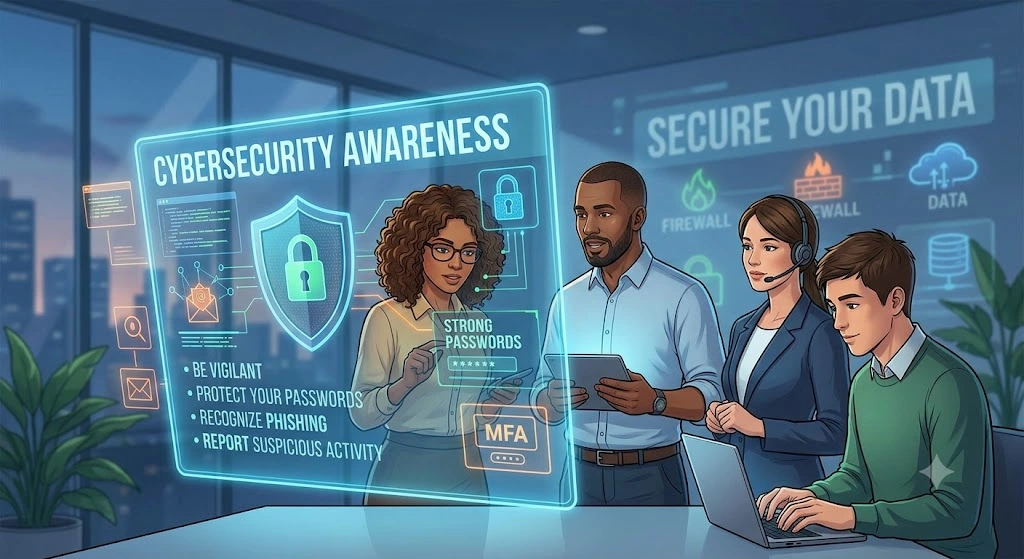
Cybersecurity awareness is the knowledge and understanding of cyber threats, online risks, and the best practices used to protect digital information, devices, and networks.
It involves recognizing potential dangers before they cause harm and making informed decisions while using the internet.
Cybersecurity awareness includes learning how to:
- Identify phishing emails
- Create strong passwords
- Protect personal information
- Browse websites safely
- Secure mobile devices
- Avoid malware infections
- Use secure Wi-Fi connections
- Protect business data
- Recognize online scams
- Respond to cyber incidents
Cybersecurity awareness is not only about technology—it is also about human behavior. Many successful cyberattacks occur because users unknowingly click malicious links, download infected files, or share sensitive information with attackers.
Why Cybersecurity Awareness Matters
The digital world is constantly evolving, and cybercriminals continue to develop more advanced attack methods. A single mistake can lead to serious consequences such as:
- Financial loss
- Identity theft
- Data breaches
- Privacy violations
- Business disruption
- Reputation damage
- Ransomware attacks
- Loss of customer trust
Cybersecurity awareness helps individuals and organizations identify threats before they become serious problems.
Instead of reacting after an attack, awareness encourages prevention.
The Growing Cyber Threat Landscape
Cybercrime has become one of the fastest-growing forms of crime worldwide.
Modern attackers use sophisticated techniques such as:
- Artificial Intelligence
- Machine Learning
- Social Engineering
- Automated Bots
- Malware
- Spyware
- Ransomware
- Credential Theft
- Deepfake Technology
Because technology evolves rapidly, cybersecurity education must also continue evolving.
Staying informed is one of the strongest defenses against cyber threats.
Common Cybersecurity Threats
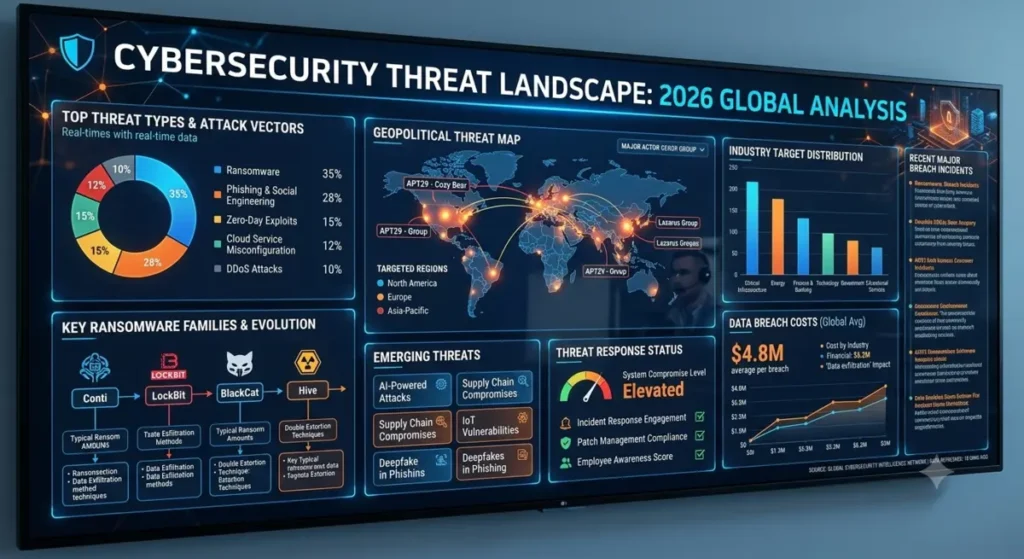
Understanding the different types of cyber threats is the first step toward staying protected.
Malware
Malware is malicious software designed to damage computers, steal information, or disrupt normal operations.
Examples include:
- Viruses
- Worms
- Trojans
- Spyware
- Adware
- Rootkits
Malware often spreads through:
- Email attachments
- Fake downloads
- Infected websites
- USB devices
Ransomware
Ransomware encrypts files and demands payment for their release.
Victims may lose access to:
- Business documents
- Customer databases
- Personal photos
- Financial records
Regular backups are one of the best defenses against ransomware.
Phishing
Phishing is one of the most common cyberattacks.
Attackers pretend to be trusted organizations to trick users into revealing:
- Passwords
- Credit card numbers
- Banking information
- Login credentials
Phishing often arrives through:
- Emails
- SMS messages
- Fake websites
- Social media messages
Identity Theft
Identity theft occurs when criminals steal personal information and use it for fraudulent purposes.
This may include:
- Opening bank accounts
- Applying for loans
- Making online purchases
- Creating fake identities
Social Engineering
Rather than attacking computers directly, social engineering targets people.
Attackers manipulate victims through trust, fear, urgency, or curiosity.
Examples include:
- Fake tech support calls
- CEO fraud
- Fake invoices
- Fake job offers
Benefits of Cybersecurity Awareness
Cybersecurity awareness provides many advantages.
Protects Personal Information
Personal information such as addresses, passwords, phone numbers, and financial details remain safer when users follow cybersecurity best practices.
Reduces Financial Losses
Cyberattacks often result in stolen money or fraudulent transactions.
Awareness reduces these risks.
Improves Business Security
Employees trained in cybersecurity make fewer mistakes.
This reduces:
- Data breaches
- Malware infections
- Insider threats
- Compliance violations
Increases Customer Trust
Customers prefer companies that protect their information.
Strong cybersecurity builds long-term trust.
Supports Digital Privacy
Privacy has become increasingly important.
Cybersecurity awareness helps protect:
- Personal conversations
- Emails
- Medical records
- Financial data
Cybersecurity Tips Everyone Should Follow
Following basic cybersecurity practices can dramatically improve online security.
Keep Software Updated
Software updates often include important security patches.
Always update:
- Windows
- macOS
- Android
- iPhone
- Browsers
- Antivirus software
- Applications
Ignoring updates leaves devices vulnerable to hackers.
Use Antivirus Software
Reliable antivirus software detects and removes malicious programs before they cause damage.
Keep antivirus software updated regularly.
Enable Multi-Factor Authentication
Multi-factor authentication (MFA) adds an additional layer of security.
Instead of relying only on passwords, MFA requires:
- Verification codes
- Authentication apps
- Fingerprints
- Face recognition
Even if passwords are stolen, attackers cannot easily access accounts.
Backup Important Data
Regular backups protect against:
- Hardware failure
- Malware
- Ransomware
- Accidental deletion
Follow the 3-2-1 backup strategy:
- Three copies of data
- Two different storage devices
- One offsite backup
Avoid Public Wi-Fi Risks
Public Wi-Fi networks are convenient but often insecure.
Avoid:
- Online banking
- Financial transactions
- Logging into sensitive accounts
When necessary, use a trusted VPN.
Download Software from Trusted Sources
Never install software from unknown websites.
Always download applications from:
- Official websites
- Trusted app stores
- Verified publishers
Understanding Password Security
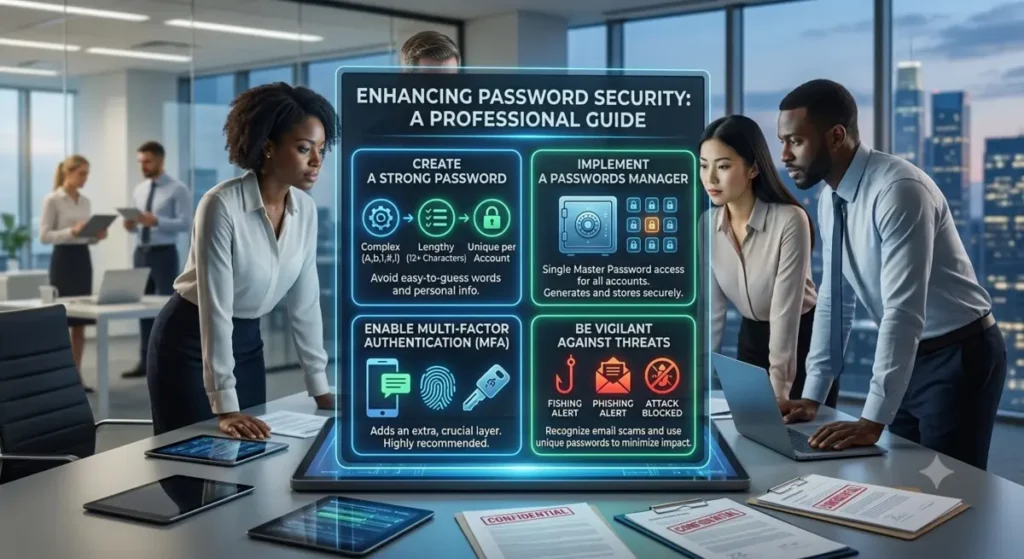
Passwords remain one of the most important aspects of cybersecurity.
Weak passwords make hacking much easier.
Strong passwords significantly reduce unauthorized access.
Characteristics of a Strong Password
A secure password should include:
- Uppercase letters
- Lowercase letters
- Numbers
- Special characters
- At least 14–16 characters
Avoid using:
- Birthdays
- Phone numbers
- Family names
- “123456”
- “password”
Why Password Reuse Is Dangerous
Many users use the same password across multiple accounts.
If one account is compromised, attackers may access:
- Banking
- Shopping accounts
- Social media
- Business systems
Always use unique passwords.
Password Managers
Remembering dozens of complex passwords is difficult.
Password managers securely store:
- Login credentials
- Secure notes
- Credit card information
They also generate strong passwords automatically.
Password Security Best Practices
Always:
- Change compromised passwords immediately.
- Never share passwords.
- Avoid writing passwords on paper.
- Use MFA whenever available.
- Review account activity regularly.
- Remove unused accounts.
Why Cybersecurity Awareness Is Everyone’s Responsibility
Cybersecurity is no longer just an IT department issue.
Every employee, student, parent, business owner, and internet user has a role in protecting digital information.
A single careless click can expose an entire organization to cybercriminals.
Cybersecurity awareness begins with education and continues through daily habits.
Conclusion
Cybersecurity awareness is the foundation of a secure digital life. As cyber threats become more sophisticated, individuals and organizations must stay informed and proactive. By understanding common threats, following cybersecurity tips, and practicing strong password security, you can significantly reduce your risk of becoming a victim of cybercrime.
At Tech Biz Pinnacle, our mission is to help readers stay ahead of evolving cyber threats with practical, easy-to-understand guidance. Building good cybersecurity habits today will help protect your data, privacy, and digital future.