


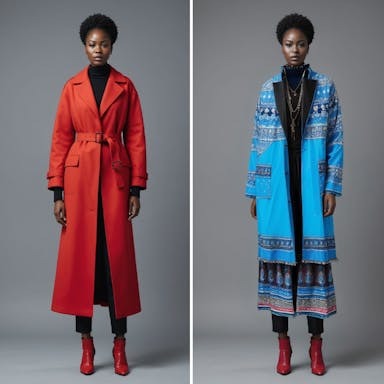
The Appeal of AI in Fashion
The idea of using artificial intelligence to visually try on clothes before buying them is particularly alluring in a time when internet shopping is common. Since I enjoy the tactile aspect of in-store shopping, I couldn’t help but wonder if artificial intelligence might replicate the feeling of trying on clothing in person AI in fashion now. Could this technology lessen the cost of costly returns and the sorrow that sometimes follows rash purchases?
Curious about how accurate this technology really is, I tested an AI in fashion platform called The New Black. The platform offers features such as virtual try-ons, AI in fashion models, and digital styling tools.
Exploring AI-Powered Outfit Generators
The platform gives users different ways to create outfit visuals. You can start with a text description or upload an image of an existing garment.
I decided to test both approaches to see whether AI could realistically reproduce clothing details and adapt an outfit to a person’s appearance.
The goal was simple: Could AI actually help me decide whether an outfit would look good before buying it?
Setting Up My AI Wardrobe
For the first experiment, I uploaded a photograph of myself along with an image of a jacket I was interested in purchasing.
This seemed like a practical test because the jacket cost more than $200. Being able to preview how it might look before spending that much would obviously be useful.
I wanted to see whether the AI could understand the jacket’s shape, colors, details, and how it might appear on my body.
Test #1: Trying On a Dream Jacket
The first result was entertaining but far from perfect.
The AI in fashion managed to recognize several important features from the original images. Surprisingly, it even reproduced my tattoo fairly well.
However, there were also obvious errors.
The generated image changed some of the jacket’s colors and incorrectly represented parts of my body. It even added a scarf that wasn’t included in the original outfit.
That made it clear that AI image generation can understand the general concept of an outfit without necessarily reproducing every detail accurately.
Improving the AI’s Results
Instead of giving up after the first attempt, I decided to provide more precise information.
The platform had automatically made assumptions about details such as my age and nationality. I corrected the information and created a more detailed description of the jacket.
This highlighted an important part of working with AI fashion tools: the quality of the input can significantly influence the output.
A clearer image and more detailed prompt can sometimes help the system understand what you actually want.
Testing a Paid Version
After using the available free credits, I purchased a small $5 package so I could continue experimenting.
The next result was noticeably better.
The jacket looked more realistic and the overall composition was closer to the original images. There were still imperfections, including an awkward hand position and minor differences in the jacket’s color details.
Even so, the improvement showed that AI outfit generators can produce more convincing results when the input and generation process are refined.
Test #2: Recreating an Outfit I Already Own
For my second experiment, I used a jacket that was already in my wardrobe.
This time, I had a photo of myself wearing the jacket, which gave the AI more visual information to work with.
The result was better overall, but the system still struggled with certain clothing details. Small differences in the shape, proportions, and individual outfit elements remained visible.
This suggested that AI is currently better at creating a visual approximation than producing an exact digital copy of a real outfit.
What AI Outfit Generators Get Right
Despite the mistakes, AI fashion tools have several interesting advantages.
Fast Visualization
Instead of imagining how a garment might look, users can generate a visual representation within a short time.
Experimenting With Styles
AI can help users explore different combinations of colors, clothing pieces, and aesthetics.
Inspiration
Even when an AI-generated outfit isn’t completely accurate, it can provide ideas for new combinations.
Convenient Shopping Assistance
Virtual try-on technology could eventually help shoppers narrow down their choices before visiting a store or placing an online order.
Where AI Outfit Generators Still Struggle
The technology is impressive, but it isn’t flawless.
Some common problems include:
- Incorrect clothing proportions
- Changed colors or patterns
- Missing or added accessories
- Unnatural hands or body details
- Incorrect garment textures
- Differences between the generated outfit and the original item
These problems matter when you’re using AI to make an actual purchasing decision.
If you’re spending hundreds of dollars on a jacket or another premium item, an AI image shouldn’t be treated as proof that the garment will fit or look exactly the same in real life.
The Quality of Your Input Matters
One lesson from the experiment was that better input generally produces better results.
A clear photograph, accurate clothing image, useful description, and appropriate prompt can all improve the final result.
Users should also avoid assuming that AI understands every visual detail automatically. If a specific feature is important—such as a pattern, sleeve design, color combination, or accessory—it can help to describe it clearly.
Can AI Replace the Fitting Room?
Not yet.
AI virtual try-ons can provide inspiration and help shoppers visualize an outfit, but they cannot completely reproduce the physical experience of wearing clothing.
An AI image cannot reliably tell you:
- Whether the fabric feels comfortable
- How tight or loose the garment actually is
- Whether the material stretches
- How heavy the clothing feels
- How it moves when you walk
- Whether the size is genuinely right for you
These physical factors remain important when purchasing clothing.
The Human Side of Personal Style
Fashion is not only about appearance.
Personal style is also connected to confidence, comfort, creativity, and individual preferences. Sometimes the most enjoyable part of shopping is discovering something unexpected and realizing that it works perfectly for you.
AI can suggest combinations, but it doesn’t completely understand the personal experience behind wearing them.
That human element is unlikely to disappear.
Is AI Fashion Technology Ready for Everyday Shopping?
AI-powered outfit generators are clearly developing quickly, but they still have room for improvement.
For now, they are best viewed as creative styling and visualization tools rather than perfect virtual fitting rooms.
As image-generation models become more accurate, future systems could potentially understand clothing textures, body proportions, garment measurements, and fit much more reliably.
That could make virtual shopping considerably more useful.
Final Thoughts
My experiment with AI outfit generation was both fun and revealing.
The technology was capable of producing surprisingly realistic fashion visuals, but it also made obvious mistakes. Small details such as colors, hands, accessories, and garment proportions could easily be altered.
For now, AI outfit generators are excellent for inspiration and experimentation, but they should not completely replace real-world fitting and personal judgment.
AI can help us imagine what an outfit might look like. The final decision, however, still belongs to the person wearing it.